Best AI Visibility Tools to Track Your Brand in ChatGPT, Gemini and AI Overviews
Eleven real AI visibility tools, priced and checked, with a free spreadsheet method for small budgets and a plain warning about how much AI answers change.

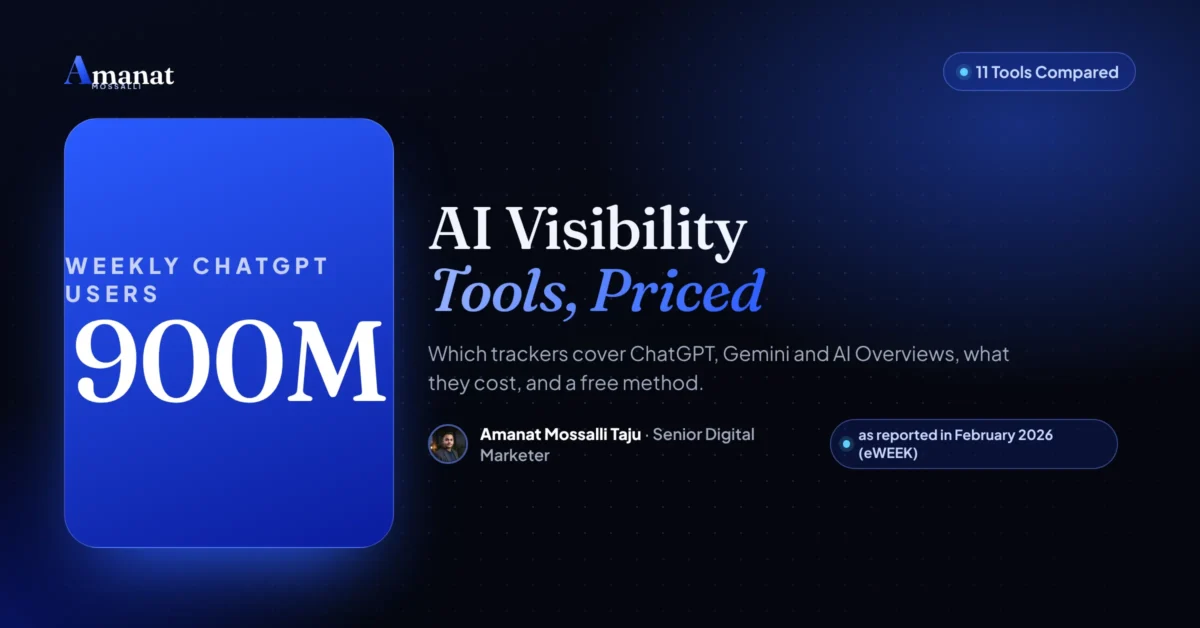
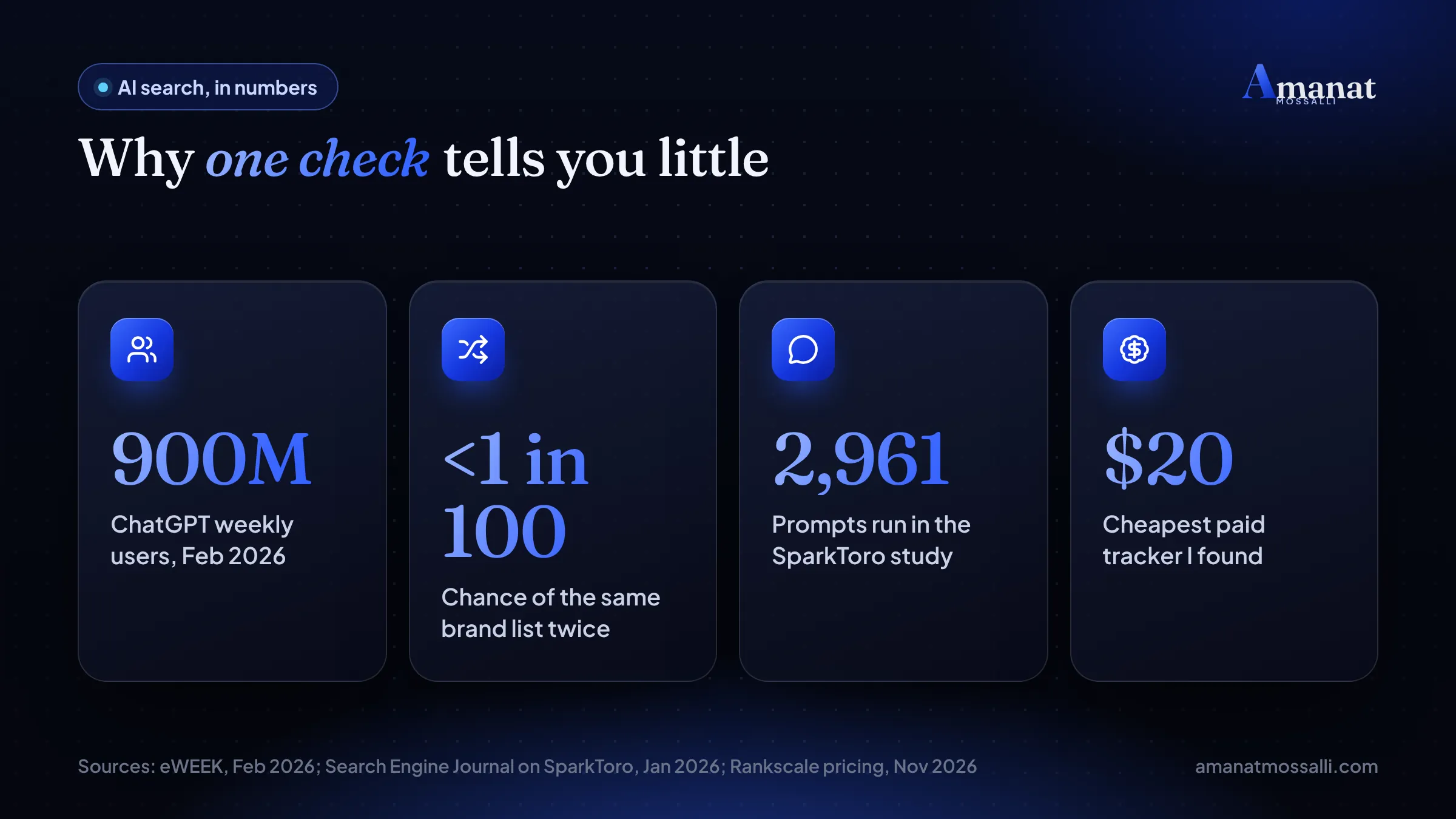
ChatGPT reached 900 million weekly active users in February 2026, OpenAI said, as TechCrunch reported. Some of those people are asking it who to hire, what to buy and where to go in your city.
AI visibility tools tell you whether your brand comes up in those answers. They check ChatGPT, Gemini, Google’s AI Overviews and others, on a schedule, and count how often you appear.
I opened the pricing page of 11 of them in November 2026. Two are free, one comes from Google itself, and the paid ones run from $20 a month to custom enterprise deals. Below you’ll find what each one tracks and what a prompt really costs on each. You’ll also get two free reports most people miss, and a spreadsheet method for a zero budget.
The Lunchtime Screenshot That Started This
The owner sent me a screenshot between two client meetings. She’d asked ChatGPT for the best wedding photographers in Dhaka. Five names came back. Hers wasn’t one, though her studio had more Google reviews than three of them.
She’d been checking by hand every few days, on her own phone, logged in. Each time she got a different list. Her message just said: “How do I even see this properly?”
That question is the whole point of this article. You can’t fix a blind spot you can’t measure. And measuring it properly is harder than it looks.
I’m Amanat Mossalli Taju. I’ve done SEO for over seven years. My clients have ranked #1 on Google in the UK, USA, Australia and Canada, and some are now cited in AI Overviews. I track AI search visibility as part of that work, so I’ve had to sort useful tools from noisy ones.
What Do AI Visibility Tools Actually Measure?
They send a set of prompts to AI engines on a schedule and record the answers. Then they count how often your brand shows up, where, and next to whom.
That’s LLM visibility tracking in plain words. Most AI visibility tools also call themselves GEO tools, short for generative engine optimisation. The name matters less than the four numbers above. My guide to generative engine optimization covers the work that moves them.
A good AI Overview tracking tool also shows which of your pages Google cites. That tells you which content is already working.
Why Are AI Answers So Hard to Track?
Because they change almost every time. Ask the same question twice and you’ll often get a different list.
Rand Fishkin of SparkToro tested this with Patrick O’Donnell of Gumshoe.ai, a company that sells AI tracking. Hundreds of volunteers ran twelve brand prompts 60 to 100 times each across ChatGPT, Claude and Google’s AI. Search Engine Journal puts the total at 2,961 prompts. The chance of the same brand list twice was under 1 in 100. The same list in the same order came up less than 0.1% of the time.
That’s from Search Engine Land’s write-up and Search Engine Journal’s report of 30 January 2026, checked 12 November 2026. The study isn’t peer-reviewed, and the authors said so.
So the useful number isn’t a yes or no. It’s the share of runs that name you, and whether that share is rising.
That’s my honest caveat on every tool below. They all sample a moving target. Treat their numbers as a trend line, never as a ranking like Google’s position 1 to 10.
Two Free Reports From Google and Bing: Start Here
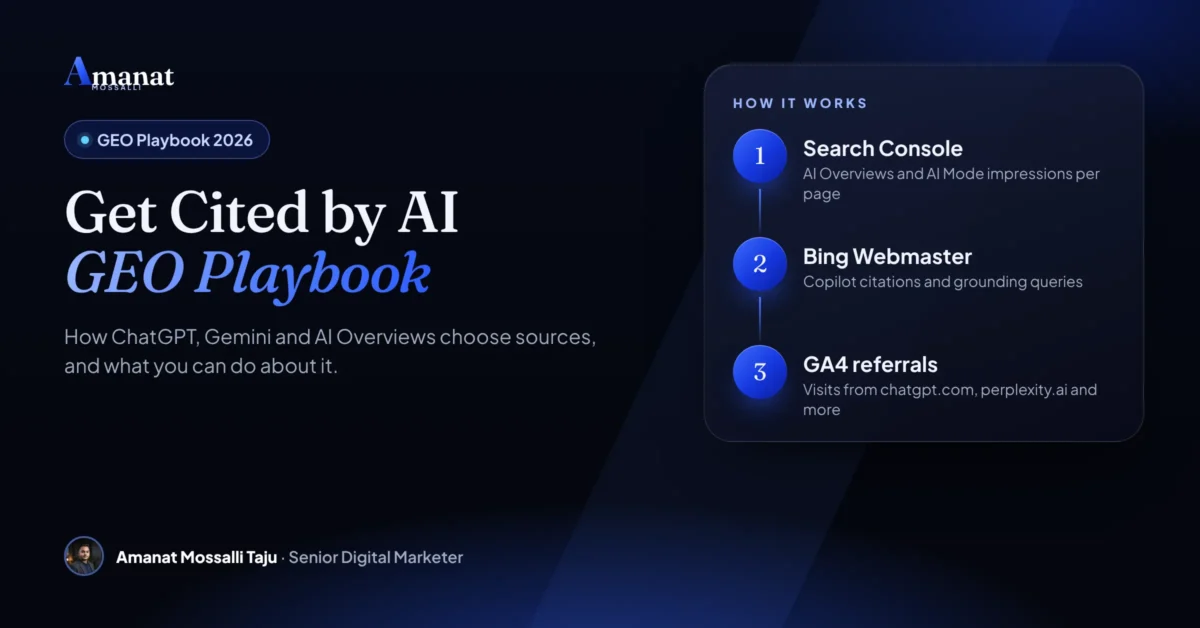
Before any paid tool, switch on the two reports that come from the search engines themselves. Neither tells you what the AI said. Both tell you, for free, whether your pages are being used.
| Report | Covers | Shows | Doesn’t show |
|---|---|---|---|
| Search Console: Generative AI report | AI Overviews, AI Mode, AI features in Discover | Impressions by page, country, date; device for Search | Clicks, the answer text, competitors |
| Bing Webmaster Tools: AI Performance | Copilot and Bing’s AI summaries | Citations, cited pages, the queries behind them | ChatGPT or other assistants |
Google rolled its report out to a small group of sites from 3 June 2026. Search Engine Journal quotes Google: “As of August 31, 2026, we’ve rolled out these insights to all websites worldwide”. Google’s help page explains the report.
Bing’s report, per Adobe’s walkthrough, counts how often your pages are cited as a source in Copilot and Bing’s AI summaries. It shows the fan-out queries behind each citation. Both checked 12 November 2026.
One more free signal sits in GA4. Visits from chatgpt.com, perplexity.ai, gemini.google.com and copilot.microsoft.com show up as referrals. Build a small exploration that filters for those sources. It won’t catch everyone, since many AI users never click. It does show which pages AI users land on.
11 AI Visibility Tools Worth a Place on Your Shortlist
I opened each official pricing or help page in November 2026. Where only a review site showed a price, I say so. Prices are in US dollars and change often, so confirm before you pay.
1. Semrush AI Visibility Toolkit
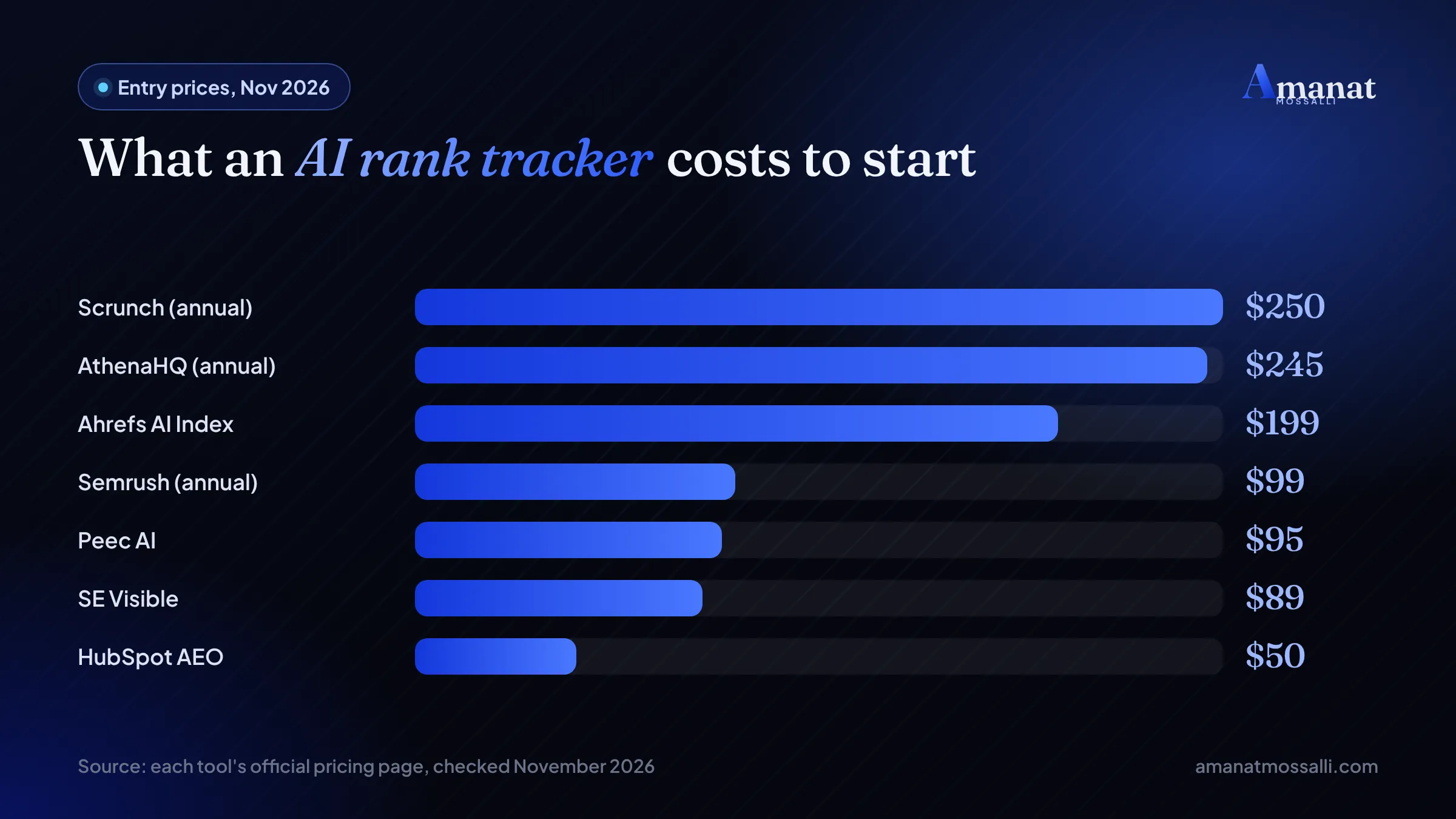
Semrush’s knowledge base lists the toolkit at $99 a month, with 25 prompts for prompt tracking. Another 50 prompts cost $60 a month. Its AI pricing page has the current bundles.
The knowledge base names ChatGPT and Google’s AI Mode for prompt tracking and brand performance. Earlier versions of this page listed more engines. Check the current list before you buy if Gemini or Perplexity matter to you.
It also gives prompt research and an audit of how ready your site is for AI crawlers. If you already pay for Semrush, this is the easiest add.
- Best for: teams already on Semrush who want AI data next to normal SEO data.
2. Ahrefs Brand Radar
Brand Radar works from a big pre-built index. The Brand Radar page now says it holds 558 million prompts across AI Overviews, AI Mode, ChatGPT, Perplexity, Gemini and Copilot.
The AI Visibility Index starts at $199 a month. Custom prompt tracking starts at $50 a month for 5 prompts and adds Claude. You can see how your brand compares across a whole market without writing every prompt yourself.
- Best for: market research and competitor gaps across thousands of questions.
3. Profound
Profound is built for large companies. Its pricing page offers a free trial: 50 prompts run daily for 7 days on ChatGPT, Gemini and Google AI Overviews. You can’t edit the trial prompts, and you get one language and one region.
Enterprise plans are custom priced and track up to nine engines. The page names Claude, DeepSeek, Perplexity and AI Mode among them.
- Best for: enterprise brands with a budget for deep reporting and many markets.
4. Peec AI
Peec AI’s Starter plan is $95 a month for 50 prompts on three models you pick, per its pricing page. Pro is $245 for 150 prompts and three countries. Every plan has unlimited users.
The model list includes ChatGPT, AI Mode, AI Overviews, Copilot, Gemini and Naver AI. Annual billing saves 15%.
- Best for: small marketing teams that want clean share-of-voice charts.
5. Scrunch
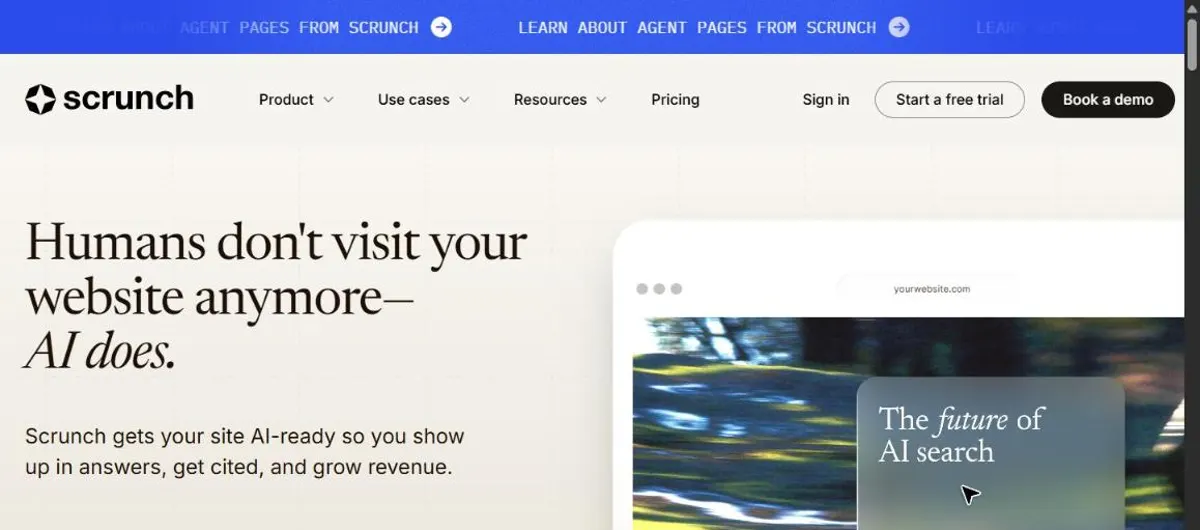
Scrunch’s Starter plan is $300 month to month, or $250 a month billed yearly. It includes 350 custom prompts and a 7-day free trial with no card.
Engines include ChatGPT, Claude, Gemini, Perplexity, Google AI Mode, AI Overviews and Meta’s AI.
- Best for: brands that want many prompts and Meta AI coverage from day one.
6. AthenaHQ
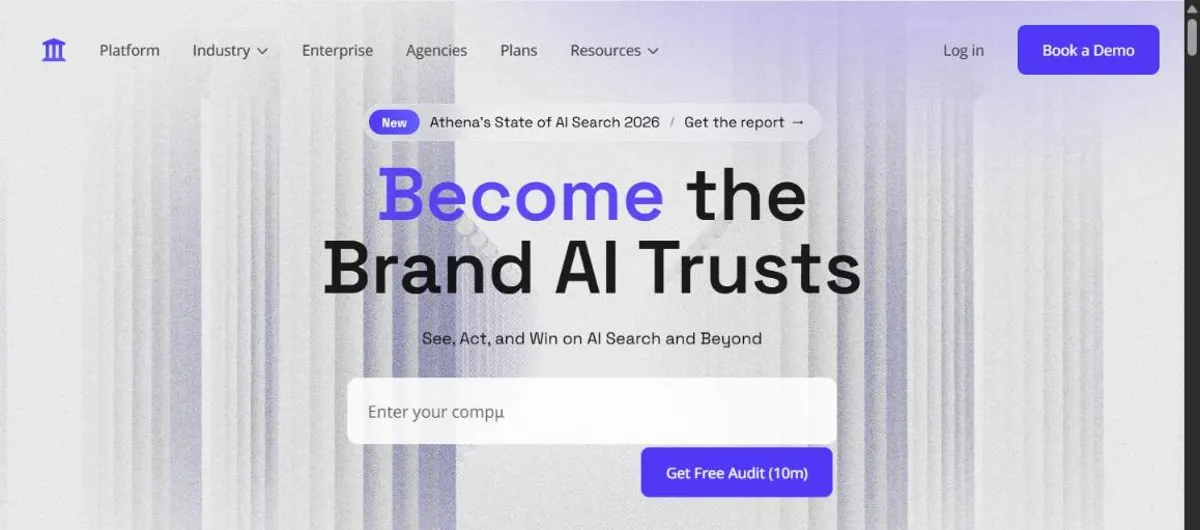
AthenaHQ has a free Essential tier with 300 starting credits. Starter costs $295 a month, or about $245 billed yearly, for 3,600 credits. One AI response uses one credit.
That goes faster than it sounds. A review dated 29 August 2026 works it out: 40 prompts on nine models, checked daily, needs about 10,800 credits a month. That’s three times the Starter allowance.
- Best for: testing a paid-style dashboard for free before you commit.
7. SE Visible (by SE Ranking)
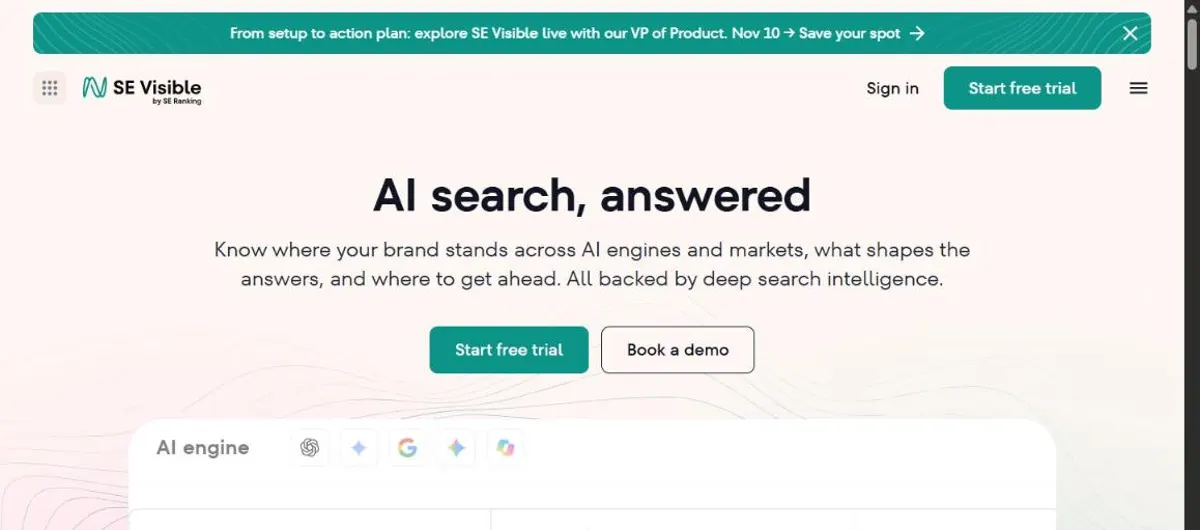
SE Visible’s Basic plan is listed from $89 a month for 75 prompts tracked daily, across five projects. Core is $189 for 200 prompts, and Agency $399 for 1,000. All cover ChatGPT, Gemini, AI Mode and AI Overviews. There’s a 10-day free trial, and annual billing takes 20% off.
- Best for: agencies that track several small clients at a fair price.
8. Rankscale
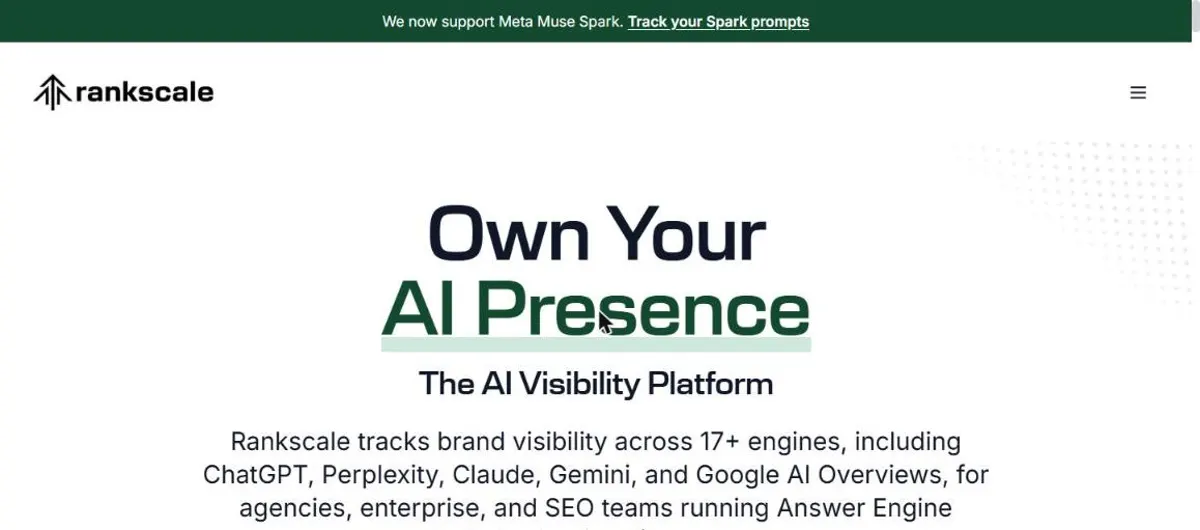
Rankscale has the lowest paid entry I found. Its pricing page lists Essentials at $20 a month for 120 credits. Pro is $99 for 1,200 credits. The plan cards name nine engines, Claude, DeepSeek and Mistral among them.
Credits buy AI queries. A typical query costs 0.25 credits per engine per prompt. Claude costs 2 credits a run and DeepSeek 1, so pick engines carefully on the small plan.
- Best for: freelancers and startups who want an AI rank tracker on a tiny budget.
9. Otterly.AI
Otterly’s help centre lists a Lite plan with 15 search prompts. Plans cover Google AI Overviews, ChatGPT, Perplexity and Copilot. Gemini, AI Mode and Claude are paid add-ons.
Its help page showed no prices when I checked. A review dated 29 August 2026 lists Lite at $29 a month and Standard at $189 for 100 prompts. Confirm on Otterly’s own pricing page. You can start a trial without card details.
- Best for: simple weekly monitoring with easy reports.
10. HubSpot AI Search Grader

This is a free one-time check. It asks ChatGPT, Perplexity and Gemini about your brand and gives a score out of 100. Sentiment counts for up to 40 of those points. The rest covers presence, recognition, share of voice and competition.
It’s a snapshot, not ongoing tracking. HubSpot’s grader page says continuous monitoring is HubSpot AEO, at $50 a month, with no HubSpot subscription needed.
- Best for: a first look in five minutes before you spend anything.
11. Google Search Console: Generative AI report
Covered above. It shows impressions in AI Overviews, AI Mode and Discover’s AI features, by page, country and date. It reached all sites worldwide by 31 August 2026.
It shows impressions only, not clicks or the exact answer text. Still, it’s free and it comes straight from Google.
- Best for: every site owner. Turn it on before you buy anything else.
Prices and Engines Side by Side
Use this table to cut your list to two. Then run both trials on the same prompts for a week.
| Tool | Engines named | Paid from | Best for |
|---|---|---|---|
| Search Console AI report | AI Overviews, AI Mode | Free | Every site |
| HubSpot AI Search Grader | ChatGPT, Perplexity, Gemini | Free (one-time) | A first snapshot |
| Rankscale | Nine named on plan cards | $20/mo | Tiny budgets |
| Otterly.AI | AIO, ChatGPT, Perplexity, Copilot | $29/mo (per a review) | Simple monitoring |
| SE Visible | ChatGPT, Gemini, AI Mode, AIO | $89/mo | Small agencies |
| Peec AI | 3 of 6 models | $95/mo | Share-of-voice charts |
| Semrush AI Toolkit | ChatGPT, AI Mode | $99/mo | Semrush users |
| Ahrefs Brand Radar | 6 in the index, plus Claude | $50 to $199/mo | Market research |
| Scrunch | 7, including Meta AI | $250/mo (annual) | High prompt volume |
| AthenaHQ | ChatGPT, Gemini, Claude and more | Free tier, then $295/mo | Try before buying |
| Profound | Up to 9 | Custom | Enterprise |
What one tracked prompt really costs
The monthly fee hides the real price. Divide it by the prompts you get and the order changes a lot.
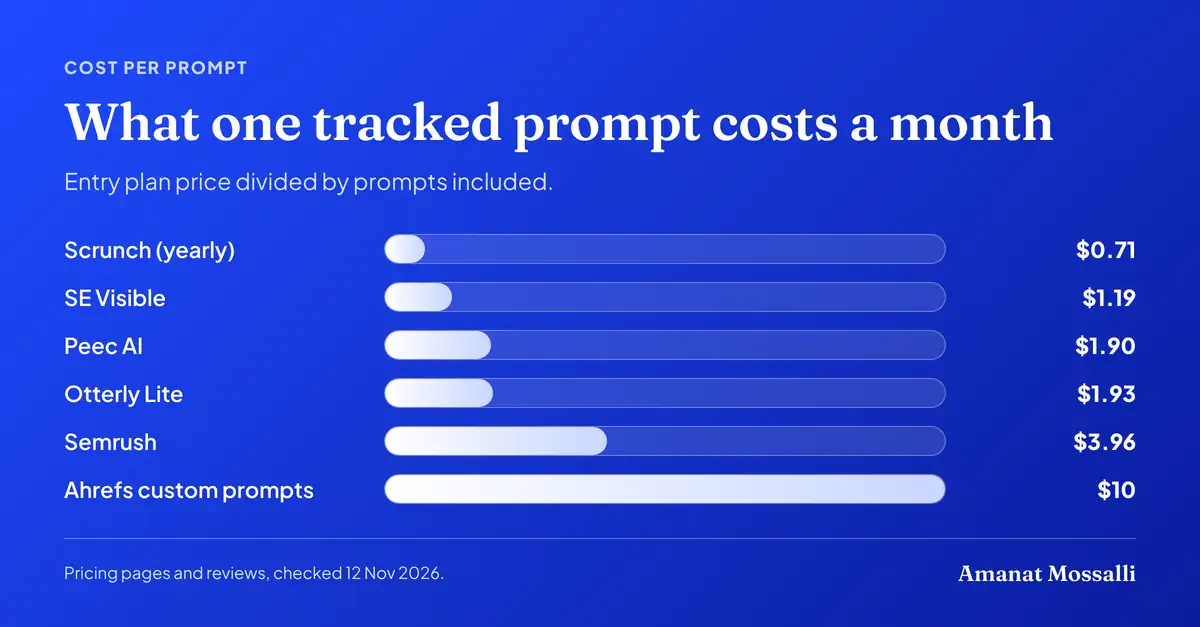
- Scrunch: $250 for 350 prompts, about $0.71 each on yearly billing.
- SE Visible: $89 for 75 prompts, about $1.19 each.
- Peec AI: $95 for 50 prompts, $1.90 each.
- Otterly Lite: $29 for 15 prompts, about $1.93 each.
- Semrush: $99 for 25 prompts, about $3.96 each.
- Ahrefs custom prompts: $50 for 5 prompts, $10 each.
Rankscale and AthenaHQ sell credits, not prompts, so they don’t fit this sum. A cheap plan with three engines can beat a dear one with nine if your buyers only use ChatGPT and Google.
Which AI Visibility Tools Fit a Small Budget?
For most small businesses in Bangladesh, the free reports plus one cheap tracker are enough. You don’t need an enterprise dashboard to learn whether ChatGPT knows your name.
- 1Turn on Search Console and Bing Webmaster Tools. Check both AI reports monthly.
- 2Run HubSpot’s free grader once to get a baseline score.
- 3Add Rankscale, Otterly Lite or SE Visible only when you need weekly tracking.
- 4Move to Peec, Semrush or Ahrefs once AI search brings you real leads.
Paying in dollars from Bangladesh needs an international or dual-currency card. Your bank will usually add 15% VAT, so a $20 plan costs about $23 before card fees. Check your card’s dollar limit before you pick annual billing.
If your site isn’t ranking well in normal Google yet, fix that first. AI engines often cite pages that already rank. My SEO guide for Bangladeshi businesses covers the basics. You can also run a free SEO audit on your site in a minute.
How to Test Two Trackers Fairly in 14 Days
Free trials are short, so plan the test before you sign up. Otherwise you’ll spend the trial learning menus instead of judging data.
Local prompts worth testing
Bangladeshi buyers ask AI tools in their own words. The Siddheswari studio’s list looked like this.
- best wedding photographer in Dhaka for holud and reception (English, local intent).
- wedding photography package price in Dhaka (price question).
- dhakay valo wedding photographer ke (Banglish).
- who does cinematic wedding videos in Dhaka (a specific service).
Check whether each tool lets you set the country and language. Some default to US results, which tells a Dhaka business very little. Peec’s Starter plan, for example, covers one country; Pro covers three.
If a tool’s answers don’t match what you see by hand on at least most prompts, don’t trust its charts. Accuracy comes before features.
The Free Method: A Prompt List and a Spreadsheet
You can track brand mentions in ChatGPT by hand. It takes about an hour a week, and it costs nothing.
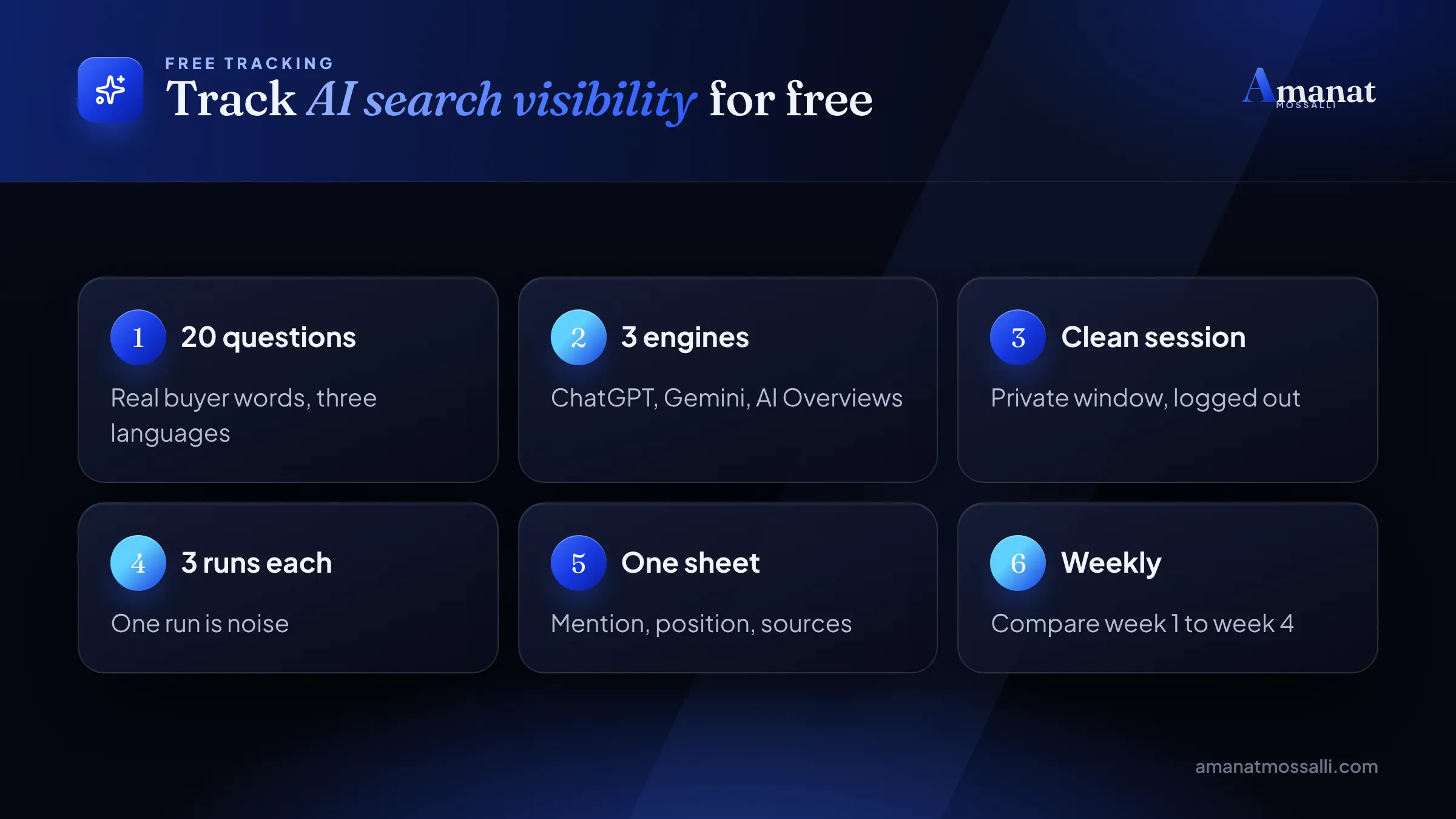
Over four weeks that’s 240 runs. If you were named in 30 of the first 60 and 42 of the last 60, your share went from 50% to 70%. That’s a real signal, even if no single answer can be trusted.
This method won’t scale past one brand. It will tell you whether paying for a tool is worth it.
Add one more column that’s easy to forget. Call it “Was the answer correct?” AI engines sometimes give old prices, closed branches or the wrong phone number. Each wrong fact is a task for you, usually a page or profile to update.
After four weeks you’ll know three things. Which engines know you, which rivals keep showing up, and which websites the AI trusts in your field. That’s more than many paid reports tell you.
What Should You Track Each Month?
Track the few numbers that lead to a decision. Everything else is a pretty chart.
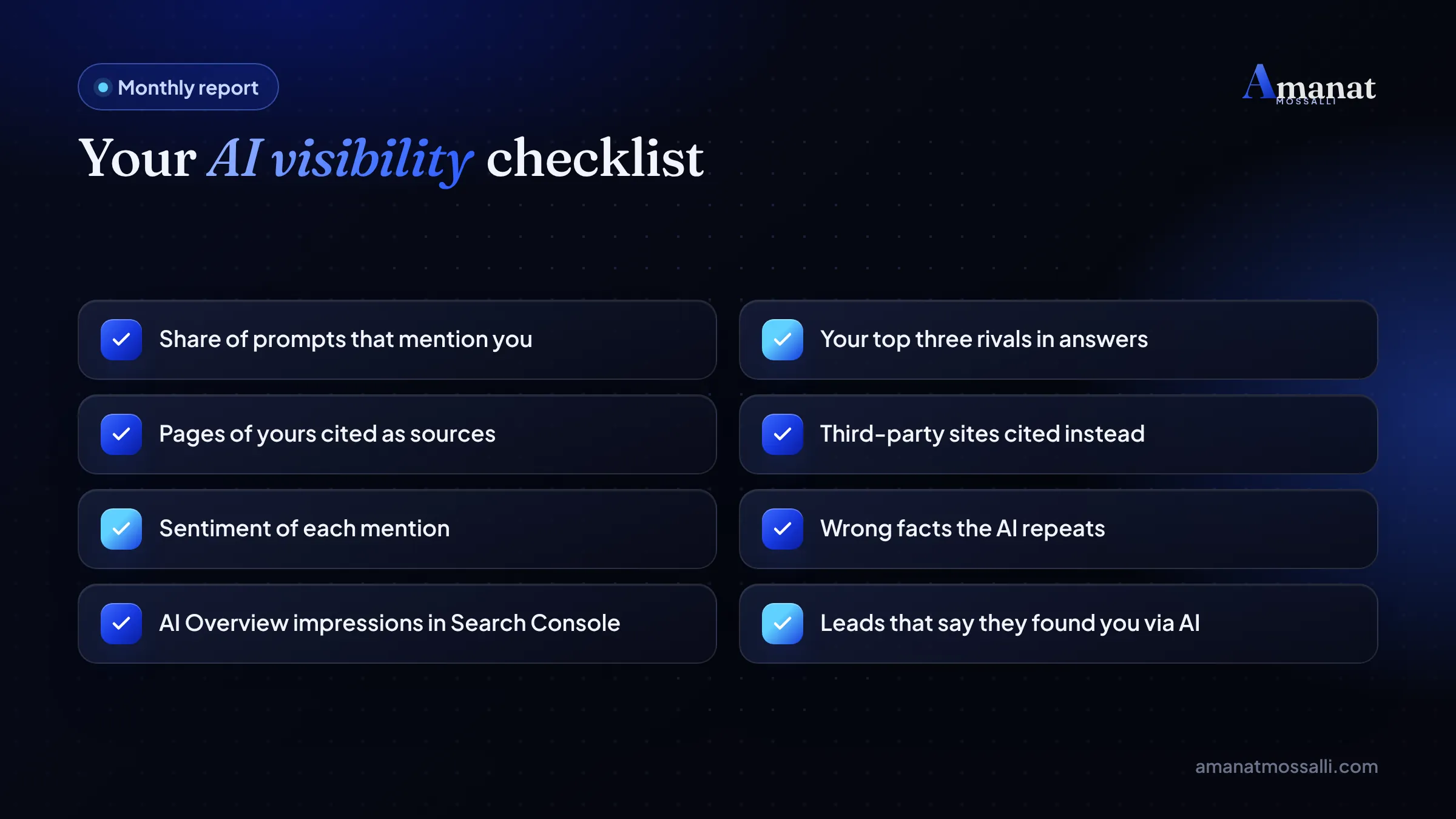
The “third-party sites cited instead” line is gold. It shows which review sites, news pages or lists the AI trusts in your field. Those are the places to earn a mention.
For the Siddheswari studio, that line was the answer. ChatGPT kept citing two wedding blogs and one listicle on a Dhaka lifestyle site. Her studio wasn’t on any of them. Getting onto those pages became the job, not rewriting her homepage.
Mistakes That Make AI Tracking Data Useless
- Judging by one screenshot. One run proves nothing. Look at the share across many runs.
- Checking while logged in. Your own chat history sways the answer.
- Only tracking your brand name. People ask “best X in Dhaka”, not “is my brand good”.
- English-only prompts. Many local buyers type in Bangla or Banglish.
- Too many prompts too early. 300 random prompts bury the 20 that matter.
- Ignoring the sources. The cited pages tell you what to fix.
- Buying annual on day one. Run a trial for two weeks first.
I’d skip any tool that promises to “rank you #1 in ChatGPT”. Tools measure. They don’t move the answer on their own.
What Moves Your Brand Visibility in AI Search?
The same things that build trust everywhere else. Clear pages that answer real questions, mentions on sites the AI reads, and consistent facts about you across the web.
- Write pages that answer one buyer question each, with the answer in the first two lines.
- Keep your name, address, prices and services the same on every profile.
- Earn mentions on news sites, lists and directories that AI engines cite in your field.
- Collect reviews on Google and other public platforms.
- Grow normal organic traffic too, since AI engines often cite pages that already rank. My guide on how to increase organic traffic in Bangladesh shows where to start.
- Fix wrong facts the AI repeats by correcting them at the source.
The owner of a corrugated carton and packaging firm in Tongi had bought a paid tracker before he called me. Every Monday morning he messaged me a new chart. Up one week, down the next. Each time he wanted to rewrite his homepage.
I asked him to stop for a month. We picked 25 prompts, the questions garment buyers and FMCG procurement teams actually ask, and left them alone. We worked only on two comparison pages and three directory listings.
At the end of the month he read the four-week trend instead of the Monday number. His mention share across those 25 prompts had moved from about one run in five to about one in three. I still can’t say which single change helped most, and I don’t think anyone honestly could. But he stopped panicking on Mondays.
For more on how AI is reshaping search here, read how AI is changing digital marketing in Bangladesh. If your traffic has already dipped, my piece on AI Overviews traffic drops explains what to check. If you’d rather hire a team, see my list of top SEO agencies in Bangladesh.
FAQ: AI Visibility Tools
What are AI visibility tools?
Can I track brand mentions in ChatGPT for free?
Does Google Search Console show AI Overviews data?
What is the cheapest AI rank tracker?
Are AI visibility tools accurate?
What's the difference between GEO tools and SEO tools?
How many prompts should I track?
So Which Tool Should You Open First This Month?
None of the paid ones. Open Search Console and Bing Webmaster Tools today, because both reports are free and come from the engines themselves. Run HubSpot’s grader once. Then start the spreadsheet.
The Siddheswari studio never bought a tracker. Four weeks of the spreadsheet showed her which three sites ChatGPT trusted, and that was worth more than any dashboard. The Tongi firm did buy one, and only got value from it once he stopped reading it weekly.
If, after a month, the sheet takes more than an hour a week, that’s your signal to pay. Not before. And if you want a second pair of eyes on your prompt list, send it to me. I’ll tell you which questions I’d cut.

Amanat Mossalli Taju
Senior Digital Marketer & SEO Expert, Dhaka, BangladeshI have grown 235+ brands over more than seven years with SEO, Google and Meta Ads, server-side tracking, WordPress and AI automation. Half of my clients are in the UK, USA, Australia and Canada. Everything I write here comes from real client work.
Want this done for your business?
Book a free 15-minute call. I look at your site and ads before we talk, so you leave with clear next steps.